
Hotel bedding standards for better home sleep comfort
TL;DR:
- Hotel-quality sleep depends on long-staple cotton sheets with a 200 to 400 thread count, not higher counts.
- White bedding, proper fit, and minimal design enhance hygiene, comfort, and psychological calmness.
Most people assume the secret to hotel-quality sleep is a sky-high thread count. It is not. The real formula combines specific cotton varieties, precise sheet fit, and a carefully considered colour palette, working together to produce that consistently crisp, plush feel. Hotels follow strict procurement standards that most homeowners have never seen. This article breaks down exactly what those standards are, why they work, and how you can apply them directly to your own bedroom without guesswork.
Key Takeaways
| Point | Details |
|---|---|
| Thread count is not everything | Hotels favour 200–400 thread count sheets for optimal comfort and durability. |
| Material matters most | Long-staple cotton is preferred for its luxurious feel and lasting quality. |
| White sheets for hygiene | Hotels use white sheets to easily spot stains and brighten room appearance. |
| Bring luxury home easily | With the right materials and layering, anyone can replicate hotel bedding standards. |
Core hotel bedding standards explained
Thread count is often treated as the single measure of sheet quality, but that misses the bigger picture. Hotel bedding standards prioritise 200 to 400 thread count sheets made from long-staple cotton, including Egyptian, Pima, and Supima varieties, chosen for their balance of softness, breathability, and durability under frequent commercial laundering. A sheet woven from long-staple fibres at 300 thread count will outlast and outperform a poorly sourced 600 thread count sheet every time.
Long-staple cotton refers to fibres that are longer than average, typically above 28mm. Longer fibres produce finer, smoother yarns with fewer protruding ends, which means less pilling and a softer surface after repeated washing. Egyptian cotton and Supima cotton are both long-staple varieties. They are also more breathable than short-staple alternatives, which is why hotel guests rarely overheat even under thick duvets.
Colour is another non-negotiable standard. White bedsheets are used for hygiene visibility, high-temperature washing compatibility, and aesthetic brightness. White sheets can be bleached at 60°C or higher without colour damage. They also communicate cleanliness to guests instantly. Any stain is visible before the room is turned over, ensuring nothing slips past housekeeping.
Key hotel sheet specifications at a glance
| Specification | Hotel standard |
|---|---|
| Thread count | 200 to 400 |
| Fibre type | Long-staple cotton (Egyptian, Pima, Supima) |
| Weave | Percale or sateen |
| Colour | White |
| Washing temperature | 60°C and above |
| Durability focus | Commercial laundering cycles |
Understanding the cotton bedding benefits specific to long-staple varieties helps explain why hotels invest in these materials despite higher upfront costs. The durability over hundreds of wash cycles makes them more cost-effective in the long run.
- Percale weave: Crisp, matte finish, cool to the touch. Preferred in warmer climates or for hot sleepers.
- Sateen weave: Silky, slightly lustrous surface. Drapes smoothly and retains warmth better.
- Thread count sweet spot: 300 to 400 offers the best balance of softness and durability.
Comparing hotel bedding to common home bedding
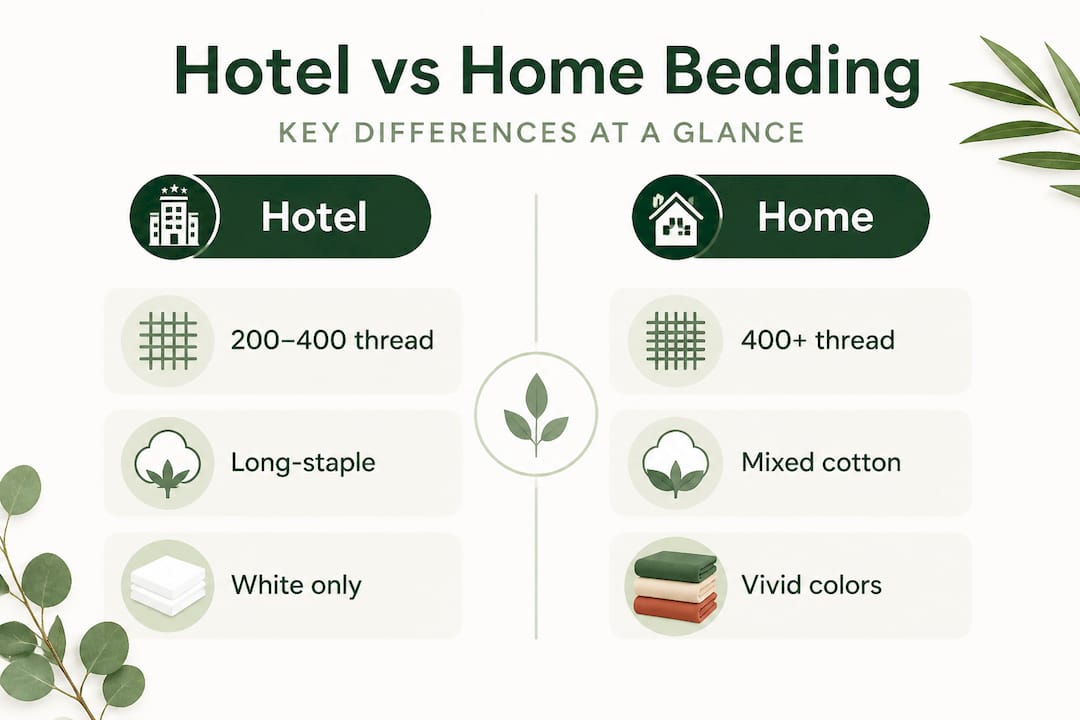
Most homeowners select bedding based on price, pattern, or a high thread count number on the packaging. Hotels take a more systematic approach, specifying exact materials, weave types, and fit requirements. The gap between these two approaches explains why home bedding often fails to replicate that hotel feel.
Side-by-side comparison
| Factor | Typical home bedding | Hotel standard bedding |
|---|---|---|
| Thread count | Often 400 to 1000+ | 200 to 400 |
| Fibre type | Mixed or short-staple cotton | Long-staple cotton |
| Weave | Varied | Percale or sateen |
| Sheet fit | Standard depth | Deep-pocket fitted |
| Colour | Patterned or coloured | White |
| Durability | Moderate | High (commercial grade) |
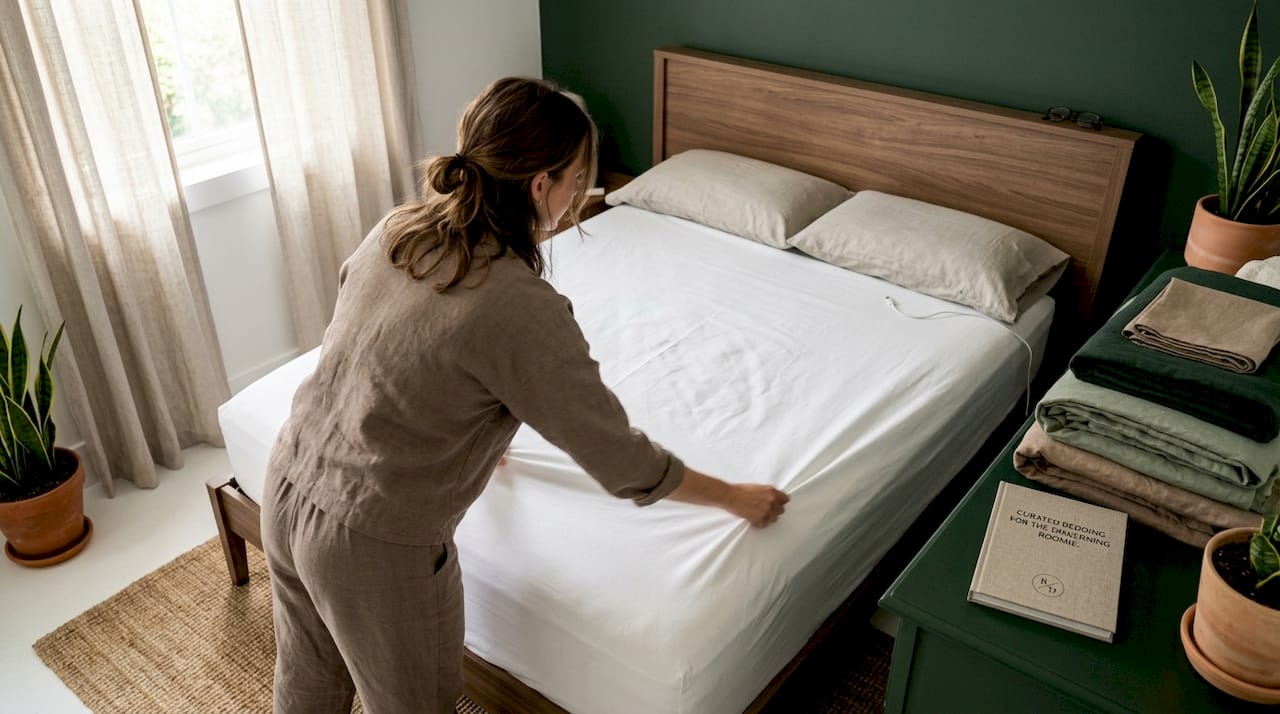
The detail that makes the biggest practical difference is sheet fit. Deep-pocket fitted sheets are sized to stay securely on mattresses 30cm to 40cm deep, including mattress toppers. A standard fitted sheet on a thick mattress will pull loose overnight, creating exactly the kind of disrupted bedding experience that hotels work hard to prevent. Choosing deep fitted sheets is one of the most effective single upgrades you can make.
To replicate hotel comfort at home, experts recommend prioritising long-staple cotton percale or sateen at 300 to 400 thread count, using deep-pocket fitted sheets, and pairing these with a down-alternative duvet for that characteristic crisp yet plush feel. The hotel sateen sheets available from Roomie Design follow this exact specification.
Steps to upgrade your home bedding:
- Replace current sheets with long-staple cotton percale or sateen at 300 to 400 thread count.
- Switch to deep-pocket fitted sheets sized for your actual mattress depth.
- Choose a down-alternative duvet insert with a tog rating suited to your season.
- Use a duvet cover in white or a near-white neutral tone.
- Add a flat sheet as a middle layer between duvet and sleeper, as hotels do.
Pro Tip: Wash new sheets twice before first use. This removes any finishing agents from the manufacturing process and softens the fibres, producing a feel closer to well-laundered hotel sheets.
How material, colour and design impact sleep quality
The choice of fabric, colour, and design in hotel bedding is not purely aesthetic. Each decision serves a function linked to hygiene, temperature regulation, and psychological comfort.
Fabric and breathability: Long-staple cotton, whether percale or sateen weave, allows air to circulate between fibres. This regulates body temperature through the night. Synthetic blends trap heat. Microfibre can feel soft initially but often causes night sweats after a few hours of use.
White and sleep psychology: White sheets signal hygiene and order at a visual level. A clean, bright bed communicates that the space is fresh and ready. This matters more than most people realise. The brain responds to visual cues in the bedroom before sleep, and clutter or strong colour in the bedding can increase mental stimulation rather than calmness.
Minimal design and calm: Hotels favour plain, striped, or very subtly patterned bedding for a reason. Busy prints introduce visual noise. A minimal design creates a neutral backdrop that supports the transition into sleep. This is consistent with general top bedding design tips for bedroom styling.
Plain white or neutral-toned bedding in a natural fibre consistently scores highest for perceived cleanliness, comfort, and visual calm in hospitality design research.
- Percale: Crisp, breathable, ideal for year-round use
- Sateen: Smooth, slightly warm, suited to cooler months
- White or off-white: Maximises perceived cleanliness
- Minimal pattern: Reduces visual stimulation before sleep
- Natural fibre: Cotton, linen, or lyocell for temperature regulation
Pro Tip: If you prefer colour in your bedroom, introduce it through cushions and throws rather than your sheets or duvet cover. This keeps the sleep surface calm while allowing personal expression elsewhere in the room.
Practical guide: Bringing hotel bedding standard home
With the background clear, here are concrete steps to bring hotel-level bedding into your own bedroom.
- Select the right thread count. Stay within the 200 to 400 range for long-staple cotton. Avoid thread counts over 600, which are often achieved by counting multi-ply yarns and do not indicate superior quality.
- Choose your weave. Percale for a crisp, cool finish. Sateen for a softer, slightly warmer feel.
- Fit the sheets to your mattress. Measure your mattress depth including any topper. Order deep-pocket fitted sheets accordingly.
- Pick a neutral duvet cover. White, cream, or pale grey in a cotton weave. Consider hotel striped sheets for a classic hospitality aesthetic with structured visual detail.
- Layer properly. Fitted sheet, flat sheet, duvet with cover. This layering system is standard in every quality hotel room and allows easy temperature adjustment through the night.
- Follow correct care. Wash at 60°C where the label allows. Tumble dry on a medium setting and remove promptly to reduce creasing.
- Follow bed bug prevention advice when travelling and returning home, to protect your upgraded bedding from infestation.
Pro Tip: Iron or steam your flat sheet and duvet cover after laundering. Hotels press all bedding before use. This one step delivers a noticeably crisper finish that reinforces that hotel-room feel.
Why most people miss the real secret to hotel bedding
Here is the honest observation: the bedding industry has trained consumers to chase thread count numbers the way the audio industry once trained buyers to chase speaker wattage. It sells products, but it does not improve sleep.
The actual variables that matter are fibre length, weave structure, sheet fit, and how the bed is layered. A 250 thread count sheet in Egyptian cotton percale, properly fitted and freshly laundered, will feel better than a 1000 thread count polyester blend. This is not opinion. It reflects how the cotton bedding expertise underpinning commercial hospitality procurement actually works.
Most homeowners also skip the flat sheet entirely, going straight from fitted sheet to duvet. This removes one of the key layers that hotels use to control both hygiene and temperature flexibility. The flat sheet is a functional component, not a formality.
The other overlooked factor is texture consistency. Hotels specify the same sheet type, thread count, and weave across all beds. There is no mismatched bottom sheet and duvet cover from different fabric families. Consistency in texture across all layers produces a cohesive feel that is hard to identify consciously but immediately obvious when it is present.
Discover premium bedding options for your home
Ready to apply these standards? Roomie Design offers a curated range of bedding built to hotel-level specifications.
The hotel-inspired duvet set delivers crisp cotton construction with contrast border detailing, closely mirroring classic hospitality styling. For a warmer, more opulent look, the gold hotel bedding set combines premium weight and rich tonal design. Those prioritising natural fibre breathability will find the white linen bedding set an excellent choice, offering the texture and temperature regulation that cotton alternatives cannot match. All options are available across standard UK sizes with full size guides on site.
Frequently asked questions
What thread count do hotels typically use?
Hotels generally use sheets with a thread count between 200 and 400, favouring long-staple cotton for softness and durability under frequent commercial laundering.
Why are hotel sheets always white?
Hotels use white sheets because they clearly show any stains, enable high-temperature washing, and maintain consistent aesthetic brightness across all rooms.
Can I replicate hotel bedding comfort at home?
Yes, by choosing long-staple cotton percale or sateen at 300 to 400 thread count, adding deep-pocket fitted sheets, and layering with a flat sheet and down-alternative duvet.
Is hotel bedding more durable than home bedding?
Hotel bedding is designed for frequent commercial laundering, making long-staple cotton significantly more durable than the mixed-fibre sheets commonly found in home use.
Recommended
- How to choose bedding for stylish comfort at home – Roomie Design
- Why upgrading your bedding transforms sleep and style – Roomie Design
- Bedding size guide for comfort and style at home – Roomie Design
- Why high-quality sheets improve your sleep and home – Roomie Design
- Mattress Sanitization Service | Kill Dust Mites & Bacteria


