
Why upgrading your bedding transforms sleep and style
TL;DR:
- Bedding significantly influences sleep quality by managing body temperature and microclimate. High-quality fabrics and proper room temperature enhance thermal comfort for better rest. Upgrading bedding helps, but addressing mattress, pillow, and room environment is also essential.
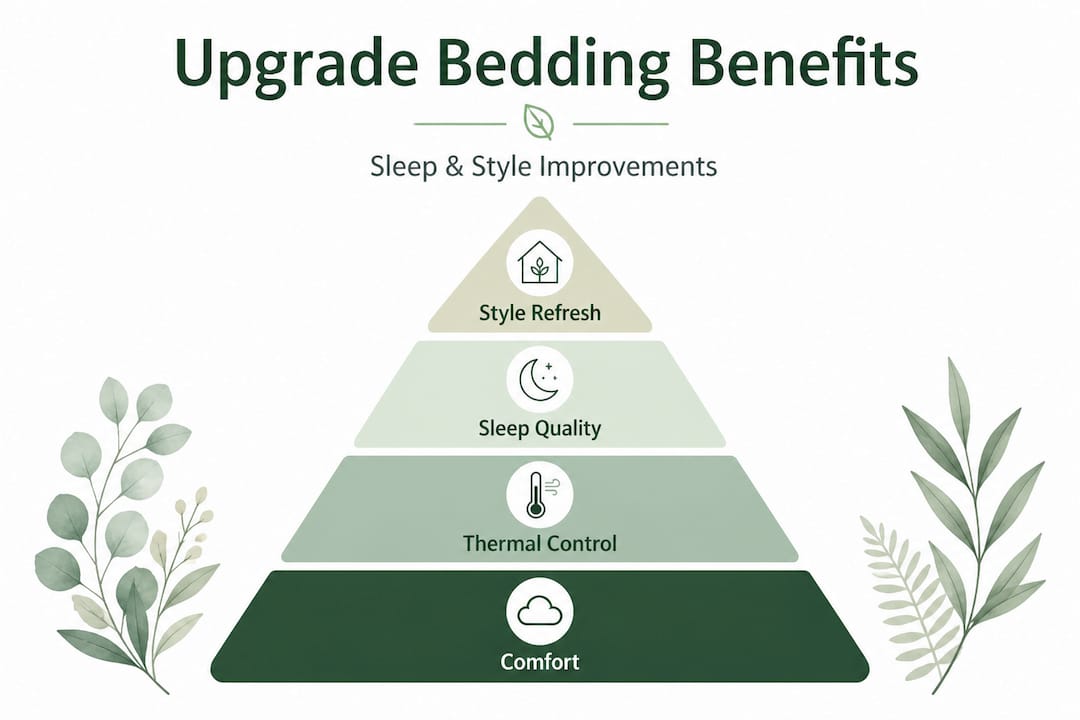
Most people blame poor sleep on their mattress or noisy neighbours, yet the fabric touching your skin every night rarely gets the same attention. Bedding plays a direct role in how quickly you fall asleep, how long you stay asleep, and how your bedroom looks and feels. Modern sleep research points clearly to thermal comfort as one of the most controllable factors in nightly rest, and your sheets, duvet, and pillowcases sit right at the centre of that. This guide covers the evidence, the myths, and the practical steps to make a bedding upgrade count.
Key Takeaways
| Point | Details |
|---|---|
| Thermal comfort matters | Bedding that regulates heat is crucial for better sleep quality. |
| Quality beats thread count | Fibre and weave matter more for comfort and durability than high thread counts. |
| Upgrade signs are clear | Visible wear, overheating, or poor sleep signal it’s time for a change. |
| Context is everything | Bedding upgrades work best when matched to your actual comfort challenges. |
| Care extends benefits | Proper care and environment choices help you get the most from better bedding. |
How bedding impacts sleep physiology
Sleep is not just a mental event. Your body follows a precise thermal sequence every night, dropping its core temperature to trigger and maintain deep sleep. The bedding you choose either supports or disrupts that process.
“Upgrading bedding can improve sleep by helping manage body temperature and thermal comfort, particularly the skin-to-air microclimate and heat retention at the layers touching your body.” — National Sleep Foundation
The term microclimate refers to the narrow zone between your skin and your top sheet or duvet. This zone accumulates heat and moisture throughout the night. If your bedding traps too much of both, your body struggles to cool down, and sleep quality suffers. As explained in our guide on high-quality sheets improve sleep, the right fabric choice directly influences how well your body manages this overnight temperature cycle.
Different fabrics behave very differently in this regard:
- Cotton percale: Crisp, breathable, and moisture-wicking. Ideal for warm sleepers.
- Linen: Highly breathable with natural temperature-regulating properties. Gets softer with each wash.
- Mulberry silk: Smooth, lightweight, and naturally temperature-responsive. Works in both warm and cool conditions.
- Lyocell and bamboo: Excellent moisture management, soft against sensitive skin, and sustainably sourced.
- Polyester blends: Often trap heat and moisture, which can worsen the microclimate for hot sleepers.
Bedding is not just a comfort preference. It is a functional choice with measurable consequences for how well you sleep each night.
Thread count myths and real quality indicators
Walk into any linen department and you will see thread counts ranging from 200 to over 1,000. The implication is clear: higher numbers equal better sheets. This is largely a marketing fiction.
Thread count alone is not a reliable measure of sheet quality. Manufacturers can inflate thread counts by using multi-ply yarns, counting each individual strand within a twisted thread as a separate count. The result is a sheet with an impressive number on the label but poor breathability and a heavy, stiff feel in practice.
What actually determines bedding quality:
| Quality factor | What to look for | What to avoid |
|---|---|---|
| Fibre type | Long-staple cotton (Egyptian, Supima), pure linen, mulberry silk | Short-staple cotton, polyester blends |
| Weave | Percale (crisp, cool), sateen (smooth, slightly warm) | Loose weaves that pill quickly |
| Thread count range | 200 to 400 for cotton percale | Claims above 800 on single-ply cotton |
| Finish | Natural, uncoated | Chemical softeners that wash out |
| Certifications | OEKO-TEX, GOTS | No certification or vague labelling |
Pro Tip: Rub the fabric between two fingers. Quality long-staple cotton feels smooth and cool, not rough or papery. If a sheet feels artificially silky in the shop but stiffens after one wash, it has likely been chemically treated.
Understanding the difference between genuine quality and inflated marketing claims is covered in detail in our guide on designer vs standard bedding. The short version: focus on fibre, weave, and construction rather than the number on the packaging.
When and why to upgrade: common signs you need new bedding
Knowing what good bedding looks like is one thing. Knowing when your current bedding has become a problem is equally important.
Signs your bedding is affecting your sleep:
- You wake up sweating despite a cool room temperature
- You toss and turn frequently without an obvious cause
- You feel itchy or uncomfortable against your sheets
- Your duvet feels either too heavy or insufficiently warm
- You wake up feeling unrested even after a full night in bed
Signs your bedding needs replacing on practical grounds:
- Visible pilling, thinning, or worn patches on sheets or pillowcases
- Persistent odour even after washing
- Duvet filling has clumped or shifted unevenly
- Elastic on fitted sheets no longer holds
- Fabric has yellowed or lost its original colour significantly
It is worth noting that thermal comfort issues are best addressed by bedding upgrades when overheating is the primary driver of poor sleep. If your mattress lacks support or your pillow misaligns your spine, new sheets will not solve those problems. Bedding upgrades work best as part of a broader sleep environment review, not as a standalone fix for every sleep complaint.
A useful starting point is our guide on how to choose bedding for comfort, which walks through fabric and style choices based on your specific sleep needs and bedroom aesthetic.
How to maximise the benefits of your bedding upgrade
Buying better bedding is step one. Getting the most from it requires a few additional considerations.
Pair your bedding with the right room temperature. The sleep microclimate is influenced by both your bedding and your room conditions. Even the most breathable linen sheets will struggle if your bedroom sits at 24°C or above. Most sleep research suggests a room temperature between 16°C and 19°C supports optimal sleep onset and maintenance.
| Fabric | Best room temperature range | Best for |
|---|---|---|
| Cotton percale | 16°C to 20°C | Warm sleepers, year-round use |
| Linen | 16°C to 22°C | Hot sleepers, summer months |
| Mulberry silk | 15°C to 21°C | Temperature-sensitive sleepers |
| Lyocell/bamboo | 16°C to 21°C | Sensitive skin, moisture management |
| Sateen cotton | 14°C to 18°C | Cool sleepers, winter months |
Care and maintenance tips to extend bedding life:
- Wash sheets weekly at 40°C to 60°C depending on fabric care instructions
- Tumble dry on a low heat setting or air dry flat to preserve fibre integrity
- Avoid fabric softeners on linen and silk, as they coat fibres and reduce breathability
- Rotate between two sets of sheets to reduce wear on any single set
- Store bedding in a cool, dry place, ideally in a breathable cotton bag rather than a plastic container
Pro Tip: Wash new bedding before first use. This removes any manufacturing residues and softens the fabric, particularly with linen and cotton percale, which both improve noticeably after the first few washes.
Aesthetic upgrades to consider alongside new sheets:
- Coordinated pillowcases and a duvet cover in a consistent colour palette
- A textured throw at the foot of the bed for visual depth
- European square pillows layered in front of sleeping pillows for a styled look
- Plain dye or minimal-pattern bedding for a clean, hotel-inspired finish
What most guides forget: bedding is not a cure-all — context is key
Here is an honest observation that most bedding guides skip over. Expensive bedding does not automatically fix poor sleep. The upgrade delivers real gains only when the root cause of your sleep issues is thermal discomfort or tactile sensitivity.
If you wake frequently because your mattress sags, or because your pillow pushes your neck out of alignment, upgrading bedding will provide only partial improvement at best. The same applies if your bedroom temperature is consistently too warm. Breathable sheets help, but they cannot compensate for a room that never cools below 23°C.
The most effective approach is to treat bedding as one layer of a broader sleep environment. Start by identifying your specific complaint. Waking hot and damp? Bedding fabric is likely a major factor. Waking stiff or sore? Look at your mattress and pillow first. Struggling to fall asleep? Room temperature, light, and noise may be the primary issues.
Our guide on choosing bedding for your space takes this layered approach, helping you match fabric and style choices to your actual sleep environment rather than just aesthetic preference. Investing intelligently means knowing what problem you are solving before you buy.
Ready to upgrade? Explore luxury bedding options
For those ready to act on the information above, Roomie Design offers a curated range of premium bedding sets across multiple fabrics, styles, and sizes.

The Aristocrat Gold Luxury Bedding delivers a rich, hotel-inspired aesthetic with high-quality construction. For a clean contrast-border finish, the Hotel Luxe 4-Piece Duvet Cover offers a refined, minimal look. Hot sleepers and those seeking a genuinely premium feel will find the Premium Mulberry Silk set particularly well-suited to temperature regulation and skin comfort. Each set is available in multiple sizes with full product details, fabric specifications, and customer reviews to support your decision.
Frequently asked questions
Will upgrading my bedding fix all my sleep issues?
Upgrading bedding can improve comfort and temperature regulation, but it may not solve issues caused by your mattress, pillow, or overall room environment. It works best when thermal discomfort is the primary driver.
What is the best bedding material for hot sleepers?
Breathable fabrics such as cotton percale, linen, and mulberry silk help manage heat and moisture, supporting a cooler sleep microclimate throughout the night.
Does thread count really matter for sheets?
Thread count alone is not a reliable quality indicator. Fibre type and weave construction matter far more, and very high thread counts can actually reduce breathability.
How often should I replace my bedding?
Most bedding benefits from replacement every two to three years, or sooner if you notice visible wear, persistent discomfort, or a decline in sleep quality linked to your sheets or duvet.
Recommended
- How to choose bedding for stylish comfort at home – Roomie Design
- Why high-quality sheets improve your sleep and home – Roomie Design
- Premium Grey Mulberry Silk 22 mm Luxury Designer Bedding Set – Roomie Design
- Premium Sky Blue Mulberry Silk 22 mm Luxury Designer Bedding Set – Roomie Design
- Transform your home: expert stone decor tips for luxury – Marmorique
- What Is Luxury Home Decor and Why It Matters – Marmorique


