
Cotton bedding benefits for stylish, comfortable sleep
TL;DR:
- Cotton bedding offers superior breathability, moisture control, and thermal regulation for better sleep.
- Long-staple cotton and proper weave choices enhance durability, softness, and climate suitability.
- Certifications like OEKO-TEX indicate safer, chemical-free cotton, improving comfort for sensitive skin.
Choosing bedding that genuinely delivers on comfort, style, and sleep quality is harder than it sounds. The market is flooded with options claiming luxury status, yet many fall short once they meet real sleeping conditions. Cotton stands apart. Bedding material affects sleep via skin temperature and thermal comfort, and cotton consistently outperforms alternatives when measured against these criteria. This article covers the evidence behind cotton’s advantages, breaks down the key types available, compares cotton to other popular materials, and gives you a practical checklist for choosing the right option for your bedroom.
Key Takeaways
| Point | Details |
|---|---|
| Superior sleep comfort | Cotton bedding regulates temperature and wicks moisture for restful sleep. |
| Premium options suit all needs | Percale and sateen weaves, Egyptian and Pima cotton offer tailored performance and style. |
| Easy selection checklist | Look for certified, long-staple cotton with thread count tailored to your climate and preferences. |
| Durability and health benefits | Cotton’s fibres resist wear and irritation, supporting long-lasting and skin-safe bedding. |
| Stylish bedroom impact | High-quality cotton bedding elevates your bedroom’s aesthetic and personal comfort. |
Why cotton bedding stands out
Cotton has been used in bedding for centuries, and there are measurable reasons why it continues to dominate premium sleep products. The most significant advantages are breathability, moisture control, and thermal regulation. These three factors directly influence how well you sleep, particularly during warm months or if you naturally sleep hot.
Cotton fibres are naturally hollow, which allows air to circulate through the fabric. This structure means heat does not become trapped against your skin the way it does with polyester or other synthetic materials. At night, your body temperature naturally drops slightly to support deep sleep. Bedding that traps heat disrupts this process, leading to restless nights and frequent waking.
A 2024 systematic review of nine studies confirms that bedding material directly affects sleep quality through skin and body temperature regulation, with cotton outperforming synthetics such as polyester, which trap heat and moisture.
Moisture management is equally important. During sleep, the average person loses a significant amount of moisture through perspiration. Cotton wicks this moisture away from the skin and allows it to evaporate quickly, keeping the sleep surface dry and comfortable. Synthetic fabrics retain that moisture, creating a damp and uncomfortable microclimate.
Cotton also causes considerably less skin irritation than synthetic alternatives. Its natural fibres are softer against the skin and less likely to trigger sensitivity reactions. Options such as brushed cotton bedding offer an even softer finish, making them particularly suitable for those with sensitive skin. For a step up in luxury, Egyptian cotton sheets combine these natural benefits with exceptional fibre length for added durability and smoothness.
Key benefits at a glance:
- Superior breathability compared to polyester and microfibre
- Moisture-wicking properties for a dry sleep surface
- Reduced skin irritation due to natural fibre composition
- Effective thermal regulation supporting the body’s natural sleep cycle
- Long-term durability with proper care
Types of cotton bedding and their unique advantages
Not all cotton bedding is identical. Weave type, thread count, and fibre length all determine how a sheet or duvet cover performs in practice.
Percale vs sateen weave
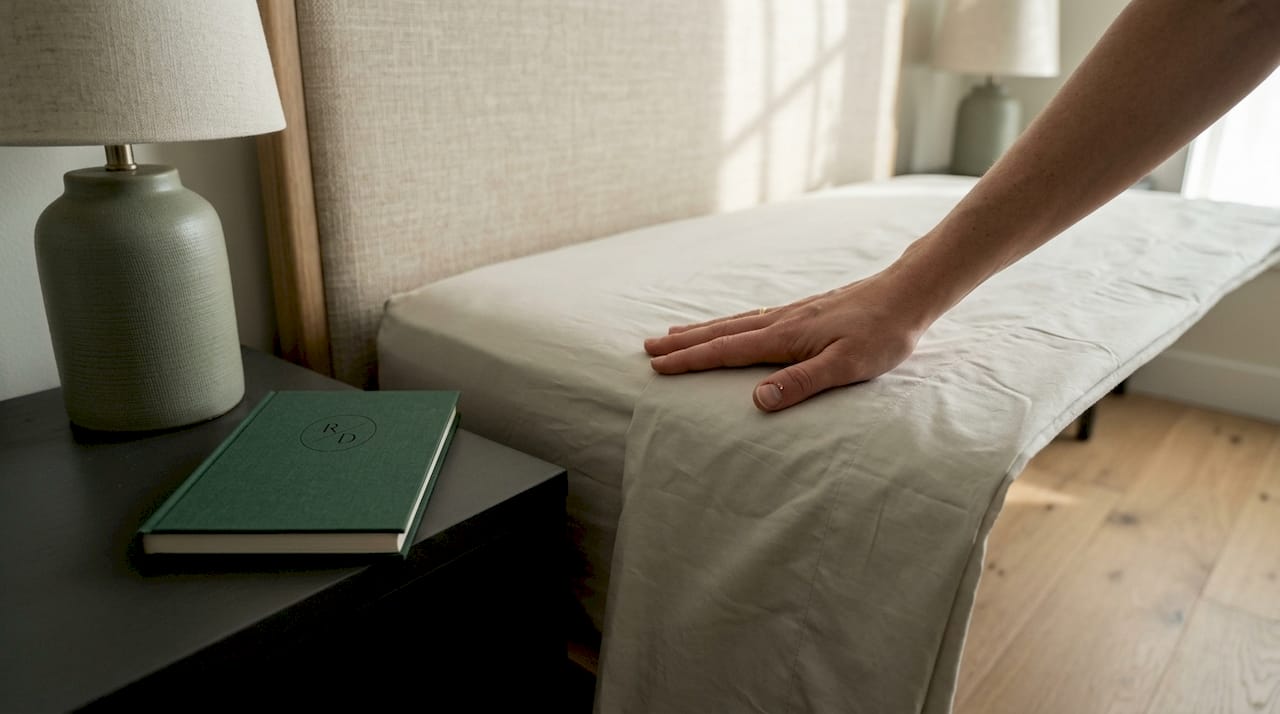
Percale uses a one-over-one-under weave, producing a crisp, matte finish. It feels cool and lightweight against the skin, making it the preferred choice for warm climates and hot sleepers. Sateen uses a four-over-one-under weave, creating a smooth, slightly lustrous surface. It feels heavier and silkier, which suits cooler conditions and those who prefer a more luxurious drape.
Thread count explained
Thread count refers to the number of threads woven into one square inch of fabric. It is commonly used as a proxy for quality, but the relationship is more nuanced. Optimal thread counts for percale cotton sit between 200 and 400, maximising breathability. Sateen works best between 300 and 600. Anything above 600 typically relies on multi-ply yarns, which reduce airflow and often compromise the softness they claim to offer.
| Weave type | Ideal thread count | Best for | Feel |
|---|---|---|---|
| Percale | 200 to 400 | Hot sleepers, warm climates | Crisp, cool, matte |
| Sateen | 300 to 600 | Cooler climates, luxury feel | Smooth, soft, lustrous |
| Brushed cotton | N/A | Winter, cold sleepers | Warm, velvety |
Long-staple cotton: why fibre length matters
Egyptian and Pima cotton are classified as long-staple varieties. Longer fibres produce stronger, smoother yarn with fewer exposed ends, meaning the fabric pills less and softens further with each wash. This makes long-staple cotton a better investment over time. Options such as concentric Egyptian cotton sheets and the one-line Egyptian cotton sheet demonstrate how long-staple fibre translates into tangible quality in finished products.
Choosing the right type in four steps:
- Identify your climate. Hot and humid conditions call for percale. Cooler environments suit sateen or brushed cotton.
- Determine your thread count range based on weave. Stay within the optimal ranges above for actual breathability.
- Prioritise long-staple cotton for durability and softness that improves over time.
- Cross-check certifications before purchasing.
Pro Tip: If you frequently wake feeling too warm, switch to a percale weave at 200 to 300 thread count. The difference in airflow is immediate and measurable.
Cotton vs. other bedding materials: how does it compare?
Cotton is not the only option on the market. Silk, linen, and polyester each have specific characteristics worth understanding before making a final decision.
| Material | Breathability | Moisture control | Durability | Maintenance | Cost |
|---|---|---|---|---|---|
| Cotton | Excellent | Excellent | High | Easy, machine washable | Mid to high |
| Linen | Very good | Good | Very high | Moderate, can wrinkle | Mid to high |
| Silk | Good | Moderate | Moderate | Delicate, specialist care | High |
| Polyester | Poor | Poor | Moderate | Easy | Low |
Linen is a strong competitor for warm climates due to its texture and airflow. However, it starts stiff and takes time to soften, and it creases significantly more than cotton. Silk offers a cool, smooth surface but requires hand washing or specialist care, and it does not manage moisture as effectively as cotton over a full night’s sleep.
Polyester is the clearest comparison point. It is inexpensive and widely available, but cotton outperforms synthetics for thermal comfort and moisture regulation, which are the two factors most directly linked to sleep quality. Over time, polyester also tends to retain odours and pill more visibly than cotton.
For those looking to bridge material types, a cotton silk blend pillow offers a practical middle ground, combining cotton’s moisture management with silk’s smooth surface feel.
Key takeaway on alternatives:
- Linen: good for breathability, but rougher and more prone to wrinkling
- Silk: luxurious surface feel, but high maintenance and lower moisture performance
- Polyester: low cost, but consistently underperforms for sleep comfort and skin health
Pro Tip: If you are buying bedding for a guest room that sees occasional use, cotton is the most practical choice. It washes easily, stores without degrading, and suits a wide range of sleeper types.
How to choose cotton bedding for your needs
With the key variables established, choosing the right cotton bedding becomes a straightforward process when approached methodically.
- Weave first. Choose percale for warm climates or hot sleepers. Choose sateen for cooler conditions or those who prefer a softer, heavier feel.
- Thread count within range. Stick to 200 to 400 for percale and 300 to 600 for sateen. Avoid anything marketed above 600 without verifying the yarn construction.
- Prioritise long-staple cotton. Long-staple percale cotton at 200 to 400 thread count delivers maximum breathability and durability for hot sleepers. Egyptian and Pima varieties consistently outperform standard short-staple cotton.
- Check certifications. OEKO-TEX certification confirms the fabric is free from harmful chemicals. This matters particularly for those with sensitive skin or allergies. Hot and humid climates also warrant checking for chemical treatments, which can reduce breathability and irritate skin.
- Match style to bedroom. Cotton bedding is available across a wide range of designs. The botanical Egyptian cotton sheet at 500 thread count illustrates how premium performance and refined design can coexist in one product.
Pro Tip: Always wash new cotton bedding before first use. This removes any residual finishing chemicals and begins the softening process that continues to improve with each subsequent wash.
Why most people overlook premium cotton’s true value
Thread count has become the dominant marketing metric in bedding, and it is largely misleading. A 1000 TC sheet made from short-staple cotton with multi-ply yarns will feel heavier and less breathable than a well-constructed 400 TC percale sheet made from long-staple Egyptian cotton. The number alone tells you very little.
The real indicators of quality are fibre origin, staple length, weave structure, and certification. These factors are harder to communicate in a single headline figure, which is why they are often deprioritised in retail marketing. Savvy buyers look at where the cotton originates, whether it is OEKO-TEX certified, and how the yarn is constructed before considering thread count.
There is also a common tendency to prioritise visual appeal over functional performance. A heavily textured or richly coloured sheet may look striking in a bedroom setting, but if it uses synthetic blends or chemically treated cotton, it will underperform on every comfort metric that actually affects sleep. The Millennia 1000 TC sheet is an example of a product where premium design and genuine fibre quality align, rather than one masking deficiencies in the other.
Reframing the purchase decision around certifications, fibre origin, and weave structure leads to consistently better outcomes over time. A slightly lower thread count in the right material will outperform a high-count synthetic blend on every practical measure.
Discover premium cotton bedding for a better night’s sleep
Roomie Design offers a curated range of Egyptian cotton and premium cotton bedding across multiple thread counts, weave types, and designs. Whether you are looking for crisp percale for warm evenings or a softer sateen finish for cooler nights, the range covers both performance and style.
The Terracotta Super Hero 1000 TC duvet cover combines high thread count Egyptian cotton with a bold, contemporary design, while the botanical Egyptian cotton sheet at 500 TC offers refined pattern work alongside genuine breathability. Browse the full cotton bedding collection at Roomie Design to find the right combination of thread count, weave, and design for your sleep environment.
Frequently asked questions
What is the best thread count for cotton bedding?
For maximum breathability and comfort, select percale cotton sheets with a 200 to 400 thread count and sateen between 300 and 600; counts above 600 use multi-ply yarns that reduce airflow and rarely improve feel.
How does cotton bedding improve sleep quality?
Cotton bedding regulates skin temperature and wicks moisture effectively, and a 2024 systematic review confirms it outperforms synthetic materials for thermal comfort and overall sleep quality.
Is Egyptian cotton really better than regular cotton?
Yes. Egyptian cotton’s longer fibres produce stronger, smoother yarn that softens further over time and resists pilling, making it a more durable and comfortable choice than standard short-staple cotton.
What certifications make cotton bedding safer for sensitive skin?
OEKO-TEX certification is the key standard to look for, confirming the fabric contains no harmful chemicals; OEKO-TEX and safe certifications are especially important for anyone with skin sensitivities or allergies.
Should I choose percale or sateen cotton for hot climates?
Choose percale in hot or humid climates for superior breathability; percale outperforms sateen in warm conditions, while sateen suits cooler environments where its heavier weave adds warmth.


