
Bedding size guide for comfort and style at home
TL;DR:
- Choosing the correct bedding size is essential for comfort, appearance, and durability.
- Measure mattress width, length, and depth, accounting for toppers and bed frames.
- Proper sizing reduces discomfort, enhances aesthetics, and ensures bedding lasts longer.
Buying new bedding should be straightforward. Yet many homeowners find themselves standing in a bedroom with a duvet that barely covers the mattress, or a fitted sheet that pops off every corner before morning. The wrong size ruins both sleep quality and the look of the room. This guide covers every standard UK bedding size, the measurements you need, and the exact steps to match bedding to your bed. By the end, you will know precisely what to buy and why it matters.
Key Takeaways
| Point | Details |
|---|---|
| Know your bed size | Accurate mattress measurements are crucial for selecting the right bedding and achieving maximum comfort. |
| Check bedding depth | Always consider mattress height and choose fitted sheets with deep pockets for a neat and secure fit. |
| Prioritise quality fabrics | High-quality materials enhance both style and comfort, making bedding use more enjoyable. |
| Avoid sizing mistakes | Double-check dimensions before purchase to prevent common errors that impact sleep and aesthetics. |
Understanding bedding sizes: A foundation for comfort
Standard bedding sizes correspond directly to mattress dimensions, so knowing your mattress size is always the starting point. In the UK, the four main sizes are single, double, king, and super king. Each size has a fixed mattress width and length, and bedding manufacturers design their products to match.
Here is a clear reference table for UK mattress and standard bedding dimensions:
| Bed size | Mattress (cm) | Duvet cover (cm) | Fitted sheet (cm) |
|---|---|---|---|
| Single | 90 × 190 | 135 × 200 | 90 × 190 |
| Double | 135 × 190 | 200 × 200 | 135 × 190 |
| King | 150 × 200 | 220 × 230 | 150 × 200 |
| Super king | 180 × 200 | 260 × 220 | 180 × 200 |
Understanding these figures helps with more than just ordering online. It shapes how the bed looks in the room. A king duvet on a double bed creates a generous, hotel-style drape. A double duvet on a king bed looks flat and inadequate. Coverage and aesthetics go together.
A few terms worth knowing before shopping:
- Duvet: A filled quilted cover, also called a quilt, placed inside a duvet cover
- Fitted sheet: A sheet with elasticated corners that wraps around the mattress
- Flat sheet: A plain sheet used between the sleeper and the duvet
- Pillowcase: A fabric cover for a pillow, available in standard, king, and Oxford styles
- Thread count: The number of threads per square inch of fabric, often used as a quality indicator
For a comfortable bedroom air conditioning guide environment to complement your new bedding, temperature control also plays a role in sleep quality.
Pro Tip: Add at least 20 to 30 extra centimetres to your mattress measurement when selecting a duvet. This gives a proper drape over the sides and creates a fuller, more luxurious look.
Tools and essentials: What you need before shopping bedding
Choosing bedding starts with accurate bed measurements and understanding fabric specifications. Before opening any website or visiting a shop, gather the correct figures for your specific bed.
Essential measurements to record before buying:
- Mattress width (side to side)
- Mattress length (head to foot)
- Mattress depth (top to base, including any mattress topper)
- Bed frame dimensions (does it add width? Some frames extend several centimetres beyond the mattress)
- Pillow dimensions (standard UK pillow is 48 × 74 cm; continental pillows are 65 × 65 cm)
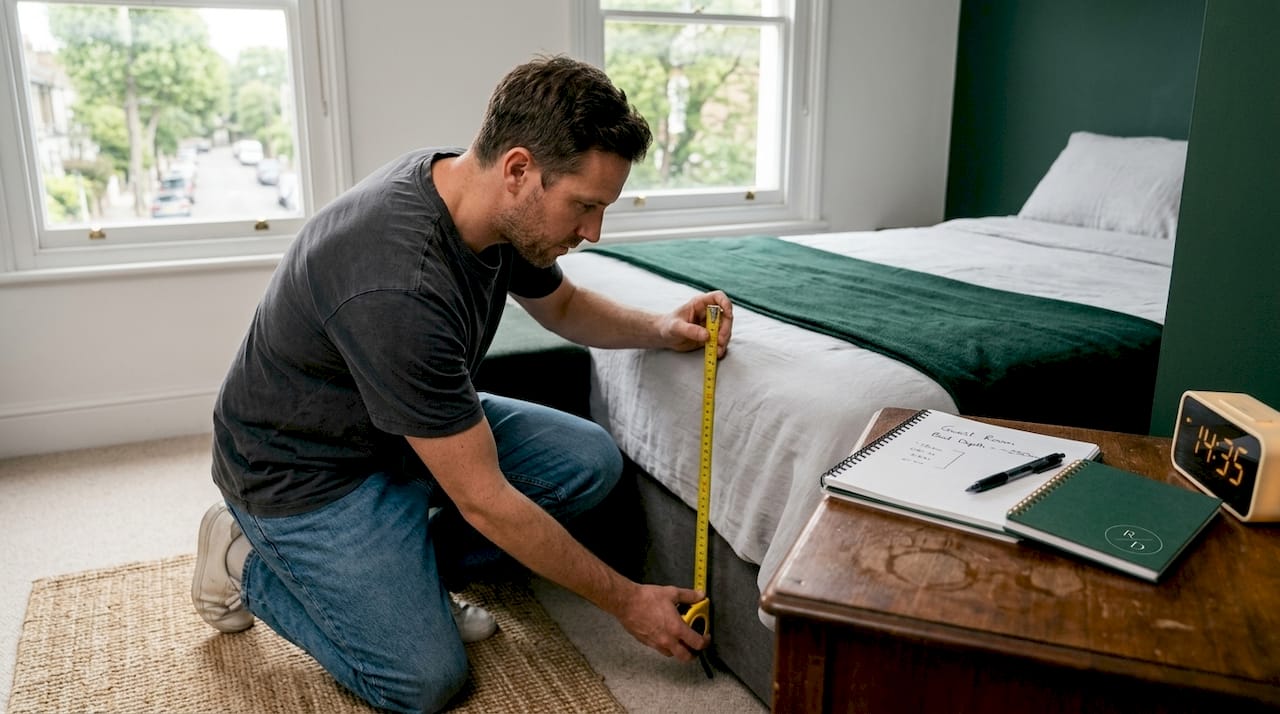
One of the most overlooked measurements is mattress depth. A standard mattress sits at around 25 to 30 cm deep. Memory foam and pocket sprung models can reach 35 to 40 cm. Add a 5 to 8 cm topper, and you have a mattress that standard fitted sheets simply cannot grip. The result is corners that lift repeatedly through the night.
Here is a quick comparison of popular bedding fabrics to help you choose the right material alongside the right size:
| Fabric | Key quality | Best for | Thread count range |
|---|---|---|---|
| Cotton percale | Crisp, cool, durable | Year-round use | 200 to 400 |
| Cotton sateen | Soft, lustrous finish | Cooler months | 300 to 600 |
| Linen | Breathable, textured | Warm sleepers | N/A (weight-based) |
| Mulberry silk | Smooth, temperature-regulating | Sensitive skin | 19 to 25 mm (momme) |
| Bamboo/lyocell | Silky, moisture-wicking | Hot climates | 250 to 400 |
If you are upgrading bedding for better sleep, pairing the right fabric with the correct size makes a measurable difference. A well-fitting linen duvet cover in summer or a sateen fitted sheet in winter both contribute directly to comfort.
Pro Tip: If your mattress depth exceeds 30 cm, look specifically for “extra deep” fitted sheets. These have a pocket depth of 35 to 40 cm and will stay secure all night without lifting.
Step-by-step: Finding the right bedding size for every bed
Matching bedding size to your bed’s shape and orientation improves both comfort and aesthetic appeal. Follow these steps to get it right every time.
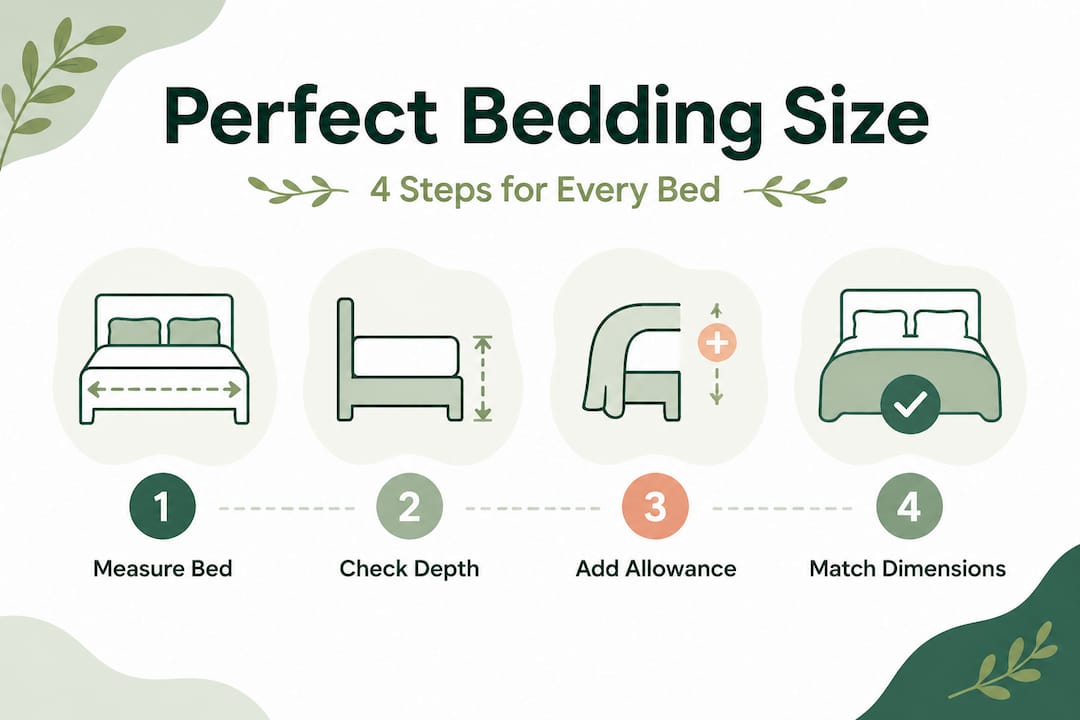
- Measure the mattress Width, length, and depth with a tape measure. Write the numbers down.
- Account for toppers or bed raises Add topper depth to the mattress depth figure before selecting fitted sheets.
- Select the correct duvet size Match or go one size up. For example, a double sleeper may prefer a king duvet for a fuller drape.
- Choose pillowcases to match pillow type Standard UK pillowcases suit standard pillows. Check dimensions if using continental or body pillows.
- Verify with sizing guides Most reputable retailers provide detailed size charts. Cross-check your measurements before adding to cart.
- Read product reviews Look for mentions of sizing accuracy, especially for unusual bed types or very thick mattresses.
For guest rooms and children’s beds, additional factors apply:
- Guest rooms: A double or king size suits most adult visitors. Opt for neutral colours and classic designs that work for everyone.
- Children’s beds: Cot beds use junior bedding (100 × 135 cm duvet). Single is standard for ages 4 and up. Fitted sheets must be very secure to prevent bunching overnight.
- Bunk beds: Use single bedding with fitted sheets that have deep elasticated corners for a firm grip on the mattress.
Studies indicate that a significant proportion of bedding returns are caused by buyers not accounting for mattress depth. This single measurement error leads to fitted sheets that do not stay on, prompting the majority of sizing complaints retailers receive. Reviewing a bedding layering guide can also clarify how multiple layers interact with each size. For rooms with complex ventilation needs, the HVAC sizing guide offers useful context on getting room conditions right.
Troubleshooting and common mistakes in bedding size selection
Even with careful preparation, mistakes can happen. Here is how to recognise and avoid the most common sizing errors.
Common mistakes buyers make:
- Buying bedding to match the bed frame, not the mattress The mattress measurement is always the reference point, not the frame size.
- Ignoring mattress depth Shallow fitted sheets on a deep mattress will not stay in place.
- Choosing pillowcases by eye Pillow dimensions vary. Always check the pillowcase dimensions match your actual pillow size.
- Assuming all brands use identical measurements Some manufacturers cut slightly larger or smaller. Always read the product specifications.
- Skipping the flat sheet A flat sheet between you and the duvet extends the life of the duvet cover and adds a layer of temperature control.
“Oversized or undersized bedding can disrupt both sleep and style.” Poor sizing affects how the bed looks, how warm it feels, and how long the bedding lasts under regular use.
The designer bedding quality guide highlights how sizing interacts directly with quality. Even premium fabric looks poor if the cover is two sizes too small and stretched across the mattress.
Pro Tip: When genuinely unsure between two sizes, always size up. A slightly larger duvet cover gives a plush, full appearance and is far easier to manage than one that is too tight.
Our take: Why perfect bedding size is key to sleep and style
Most buyers spend time comparing thread counts and fabric types. Those details matter. But size is the factor that visitors notice the first time they walk into a bedroom. A well-proportioned bed with the correct duvet drape reads as intentional and considered. An undersized duvet on a large bed looks like an afterthought regardless of material quality.
In practice, getting sizing right also means less daily adjustment. Fitted sheets that stay on, duvets that cover both sleepers evenly, and pillowcases that do not gap or bunch all reduce small but consistent irritations that accumulate into poor sleep patterns over time.
The contrarian view here is this: fabric is secondary to size. A correctly sized cotton percale set at a mid-range thread count outperforms a poorly sized silk duvet cover every single night. Size governs fit, and fit governs function.
Investing time in transforming sleep and style through correct sizing pays dividends for years. Bedding that fits properly lasts longer because it is not strained at the seams or stretched across corners. It also washes and dries more evenly, maintaining its quality through many more cycles than ill-fitting alternatives.
Pro Tip: Once you find a size that works perfectly for your bed, note the exact brand dimensions. Not just the label size, but the actual centimetre measurements. This makes future purchases faster and more reliable.
Upgrade your bedroom: Explore premium bedding styles
With a clear understanding of sizing, choosing the right product becomes straightforward.

At Roomie Design, every product listing includes precise dimensions to match your measurements directly. The Prestige Beige 1000 TC duvet cover set offers a crisp, luxury finish in multiple sizes, ideal for those who want hotel-quality results at home. For a smoother, temperature-regulating option, the Premium Green mulberry silk bedding set suits warm sleepers and sensitive skin. Browse the full collection across single, double, king, and super king sizes, with fabrics ranging from cotton and linen to lyocell and bamboo, to find the set that fits your bed and your style.
Frequently asked questions
How do I measure my bed for the correct bedding size?
Use a tape measure to record the mattress width, length, and depth, then add any topper depth to the final figure. Bed measurement is essential before buying bedding to avoid sizing errors.
Can bedding size impact my sleep quality?
Yes. Bedding that is too small or too large causes discomfort and disrupts sleep. Oversized or undersized bedding can disrupt both sleep quality and the overall look of the room.
Are there differences in bedding size between brands?
Some brands cut slightly larger or smaller than the labelled size. Always check the stated centimetre dimensions in the product listing. Brand sizing can vary for bedding, so read specifications carefully before purchase.
What is the best bedding size for a guest room?
A double or king size suits most adult guests and creates a welcoming, well-proportioned look. Choosing bedding sizes for guest rooms should prioritise versatility and ease of care.
How do I avoid common bedding size mistakes?
Always measure the mattress depth as well as the width and length, and choose fitted sheets with a pocket depth that matches. Mistakes can be avoided with careful measurement and by checking product specifications before purchase.
Recommended
- How to choose bedding for stylish comfort at home – Roomie Design
- The ultimate bedding layering guide for comfort and style – Roomie Design
- Queen vs king bedding: find your perfect size for comfort – Roomie Design
- Top bedding design ideas to transform your bedroom – Roomie Design
- How to Choose the Perfect Baby Bedding Set: Comfort, Safety, and Style


