
How to choose bedding for stylish comfort at home
Many people spend a great deal on new bedding, chasing high thread counts or following the latest trends, yet still wake up feeling too warm, too cold, or simply uncomfortable. The problem is rarely budget. It is almost always a mismatch between the bedding and the person sleeping in it. This guide cuts through the noise. You will find practical, evidence-based steps for assessing your needs, reading fabric labels with confidence, choosing the right duvet and pillows, and caring for your bedding so it lasts. By the end, every choice you make will be deliberate and suited to your bedroom, your body, and your lifestyle.
Table of Contents
- Assess your personal needs and prerequisites
- Understand bedding fabrics, weaves and thread count
- Selecting duvets, pillows and layering pieces
- Sizing, fit and care for longevity
- Why popular bedding myths keep you from true comfort
- Transform your bedroom with luxury bedding from Roomie Design
- Frequently asked questions
Key Takeaways
| Point | Details |
|---|---|
| Prioritise material | Long-staple cotton, linen, and Tencel outlast blends and offer more comfort. |
| Focus on weave | Percale stays crisp and cool; sateen provides softness and warmth. |
| Fit and care matter | Proper sizing and regular gentle washing preserve your bedding for years. |
| Layer for versatility | Smart layering lets you adjust bedding for both warmth and style as seasons change. |
Assess your personal needs and prerequisites
Let’s start by exploring what you need to know about yourself and your bedroom before you shop.
The single most useful thing you can do before buying any bedding is to take stock of how you actually sleep. Are you a hot sleeper who kicks off the covers at 2am? Do you feel the cold and pile on extra layers? Do you suffer from allergies or asthma? These factors directly shape which fabrics, fills, and weaves will work for you. Understanding your sleep style first, whether you sleep hot or cold, on your side, back, or stomach, is the clearest way to match weave, fill power, and firmness to your real needs.
Your mattress matters too. Measure its depth before buying fitted sheets. A standard mattress sits at around 25-30cm deep, but many modern memory foam and hybrid models run deeper. Getting this wrong means sheets that pop off in the night.
Consider your lifestyle as well:
- Pets or children in the bed: prioritise machine-washable, durable fabrics
- Allergies: choose hypoallergenic fills and tightly woven covers
- Rental or shared space: mattress and pillow protectors are essential
- Seasonal variation: plan for at least two tog levels across the year
Key terms worth knowing before you shop:
| Term | What it means |
|---|---|
| Tog rating | A measure of a duvet’s thermal resistance |
| Fill power | Loft and warmth capacity of down or feather fills |
| Weave | How threads are interlocked, affecting texture and breathability |
| Fibre | The raw material: cotton, linen, silk, lyocell, bamboo |
Pro Tip: Layer a lightweight blanket over a mid-tog duvet rather than buying a separate summer and winter set. You get the same versatility at a lower cost, and it works well with cotton-silk pillow options that suit both warm and cool nights.
Understand bedding fabrics, weaves and thread count
Once your needs are clear, it’s time to decode the details on fabric, weave, and thread count.
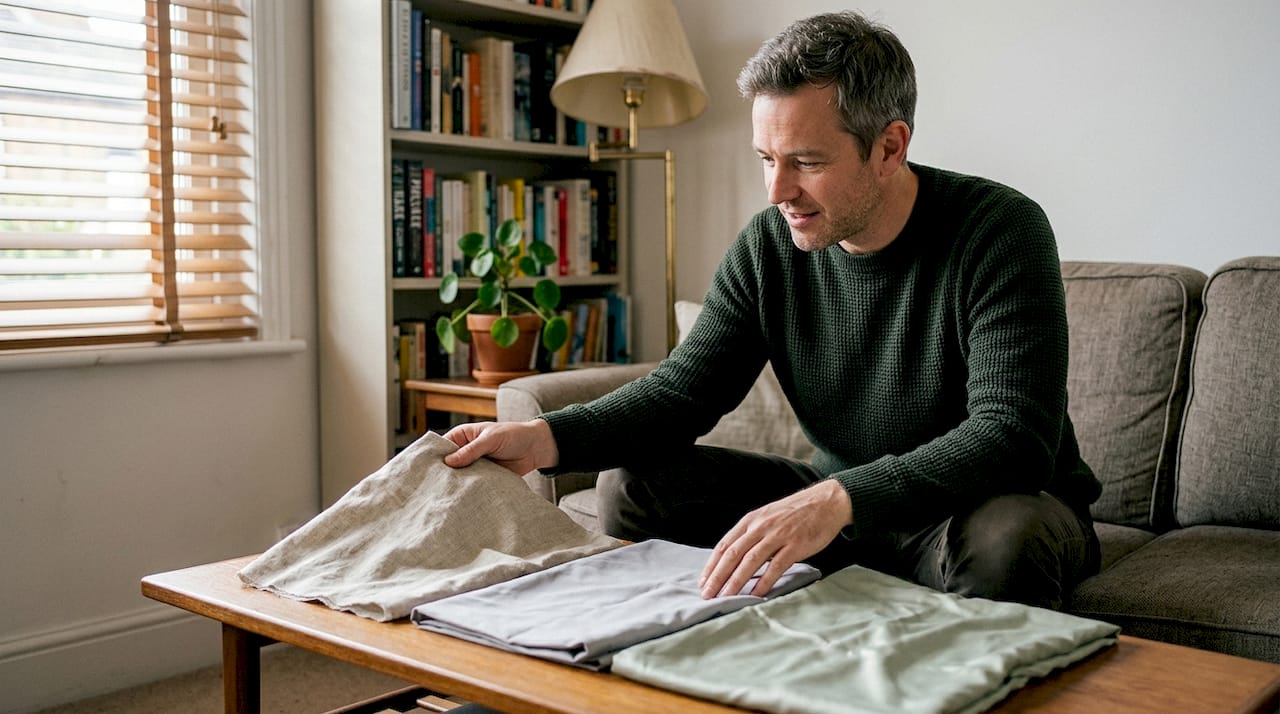
Fabric is the most important variable in bedding. Full stop. The fibre type determines how a sheet feels against your skin, how it regulates temperature, and how it holds up after repeated washing. Here is a quick comparison of the most common options:
| Fabric | Feel | Best for | Care |
|---|---|---|---|
| 100% long-staple cotton | Soft, breathable | Most sleepers | Machine wash |
| Linen | Crisp, cool | Hot sleepers | Machine wash, improves with age |
| Lyocell (Tencel) | Silky, moisture-wicking | Sensitive skin, hot sleepers | Gentle wash |
| Polyester blend | Smooth, wrinkle-resistant | Budget, low maintenance | Machine wash |
| Bamboo | Soft, antibacterial | Allergy sufferers | Gentle wash |
Weave type changes the feel and function of the same fabric entirely. Percale for cool sleepers and sateen for those who prefer warmth is a practical rule of thumb. Percale has a crisp, matte finish and breathes well. Sateen is smoother, slightly heavier, and retains heat. Flannel suits cold climates. Jersey feels like a soft T-shirt and suits casual, relaxed bedrooms.
Thread count is widely misunderstood. The optimal range for long-staple cotton sits between 200 and 600. Beyond that, manufacturers often use multi-ply threads to inflate the number, resulting in sheets that are denser, hotter, and more prone to pilling. Material quality matters far more than the number on the label.
“A 400-thread-count sheet made from long-staple Egyptian cotton will outlast and outperform a 1,000-thread-count sheet made from short-staple fibres.”
For a premium starting point, Egyptian cotton sheets with verified long-staple fibres offer consistent softness and durability. If you prefer a lighter, more relaxed aesthetic, botanical cotton options at 500 TC strike a strong balance between comfort and breathability.
Selecting duvets, pillows and layering pieces
With materials chosen, let’s turn to building the ideal bed from base layers to covers and pillows.
Choosing the right duvet starts with tog rating. A lower tog means less warmth. A higher tog means more insulation. The practical guide is straightforward:
- Summer (2.5 to 4.5 tog): lightweight, breathable, often cotton or microfibre
- Spring and autumn (7 to 10 tog): mid-weight, suitable for most UK bedrooms year-round
- Winter (10.5 tog and above): high insulation, down or high-loft synthetic fills
- All-seasons sets: two duvets that button together, giving you three tog options from two purchases
For duvet and pillow tips from independent reviewers, the consistent recommendation is to use a duvet insert inside a washable cover. This makes seasonal swaps easy and extends the life of the insert significantly. Opt for duvet inserts with covers for easy seasonal changes, choosing tog 2.5 to 4.5 for summer and 10.5 and above for winter. Down fills offer excellent loft and warmth-to-weight ratio, but synthetic fills are the better choice if allergies are a concern.
Pillows follow a similar logic. Side sleepers need a firmer, higher-loft pillow to keep the spine aligned. Back sleepers do better with medium support. Stomach sleepers need a soft, low-profile option. For allergy sufferers, microfibre or hollowfibre synthetic fills are easier to wash and less likely to harbour dust mites than natural down.
Layering is underrated. A lightweight cotton blanket or throw between the sheet and duvet adds flexibility without bulk. It is especially useful in households where two people have different temperature preferences.
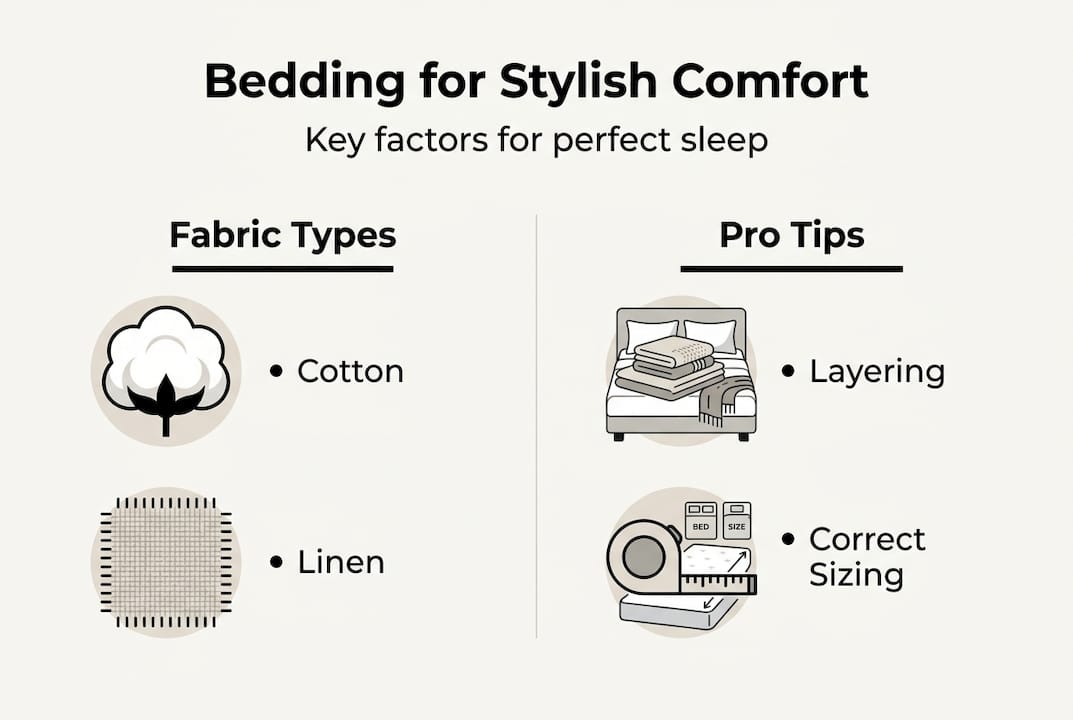
Pro Tip: Soft duvet alternatives in microfibre cotton blends give the loft and feel of down without the allergy risk, and they are fully machine washable, which is a practical advantage for busy households. Pair with cotton-silk pillows for a noticeably more comfortable sleep surface.
Sizing, fit and care for longevity
Finally, even the best bedding needs correct sizing and simple regular care for long-term enjoyment.
Getting the fit right is non-negotiable. A fitted sheet that pops off during the night is one of the most common and easily avoidable bedding frustrations. Measure mattress depth before buying fitted sheets. Choose deep-pocket options if your mattress exceeds 35cm. Also note that new sheets can shrink by up to 6% after the first wash, so always wash before use and account for slight shrinkage in your sizing.
For homeowners and renters alike, machine-washable options with mattress and pillow protectors are the most practical choice for durability in shared or rented spaces.
Key care habits that protect your investment:
- Wash before first use: removes manufacturing residues and pre-shrinks the fabric
- Rotate between two or three sets: reduces wear on any single set and extends overall lifespan
- Avoid high heat: tumble dry on low or air dry; high temperatures break down fibres faster
- Repair small tears early: a loose seam caught early takes minutes to fix; left too long, it becomes a replacement job
- Use protectors: mattress and pillow protectors add a washable barrier that keeps the main items cleaner for longer
“Consistent low-heat washing and rotating between sets can double the effective lifespan of quality cotton bedding.”
For households with extra bedding tips needs, having a spare set ready makes laundry day far less disruptive, particularly in homes with young children or pets.
Why popular bedding myths keep you from true comfort
Having covered all the essentials, let’s address a few common myths and share what actually works in practice.
The thread count obsession is the biggest obstacle between most shoppers and genuinely good bedding. Retailers have used high thread counts as a proxy for quality for years, but the reality is quite different. Inflated thread counts come from using multi-ply twisted threads, which produces a denser, hotter sheet that pills faster. Single-ply, long-staple fibres at a moderate count consistently outperform them.
The same scepticism applies to fabric marketing. “Bamboo” bedding is frequently rayon or viscose derived from bamboo, processed with chemicals that strip away many of the natural benefits. The label matters. Look for fibre type, weave, and certifications first.
The practical test is simple: how does the bedding feel after five washes? Good quality bedding softens and improves. Poor quality bedding pills, fades, and loses its shape. Buy less, buy better, and always check independent reviews before committing to a new set.
Transform your bedroom with luxury bedding from Roomie Design
Ready to shop for bedding that matches what you’ve learnt? Roomie Design offers a curated range of premium bedding sets, sheets, and pillows built around the principles covered in this guide.

For a statement bedroom, the Oriental Jacquard bedding set at 600 TC combines visual impact with genuine fabric quality. The PureComfort luxury set is a strong choice for those prioritising softness and everyday comfort. If clean, minimal styling is your preference, the embroidered duvet covers offer understated elegance with premium construction. Each option is available in multiple sizes with full care guidance.
Frequently asked questions
Is a higher thread count always better for sheets?
No. A higher thread count does not guarantee softer or longer-lasting sheets. Single-ply long-staple fibre quality matters far more, and inflated counts often result in denser, hotter sheets that pill quickly.
What bedding materials are best for hot sleepers?
Percale cotton and linen are the top choices for hot sleepers, as both weaves promote airflow and stay cool. Percale cotton or linen outperform sateen and polyester blends for temperature regulation.
How do I pick a duvet for different seasons?
Choose a lower tog (2.5 to 4.5) for summer and a higher tog (10.5 and above) for winter. Duvet inserts with covers make seasonal swaps straightforward without needing to store bulky separate duvets.
What’s the best way to care for bedding so it lasts?
Wash sheets before first use, rotate between sets regularly, and tumble dry on low heat. For rentals and shared spaces, new sheets can shrink up to 6% after the first wash, so always account for this when sizing and use protectors to extend lifespan.
Recommended
- PureComfort™ Luxury Soft Designer Bedding Set – Roomie Design
- Pair of Microfiber 60x60 cm Cushion Insert – Roomie Design
- Annabelle Silver Grey Lace Luxury Duvet Cover Set – Roomie Design
- The Simple Embroidered Duvet Cover Set (Grey/Beige) Luxury Designer Bedding Set – Roomie Design


