
Why all-season bedding is worth it: a clear guide
TL;DR:
- All-season bedding challenges the need for multiple bedding sets by regulating temperature through fabric properties and layering. It offers comfort year-round, especially when made from breathable natural fibers like cotton, linen, or bamboo, which manage moisture and airflow. Practical benefits include cost savings, reduced storage needs, and increased simplicity by eliminating seasonal swaps.
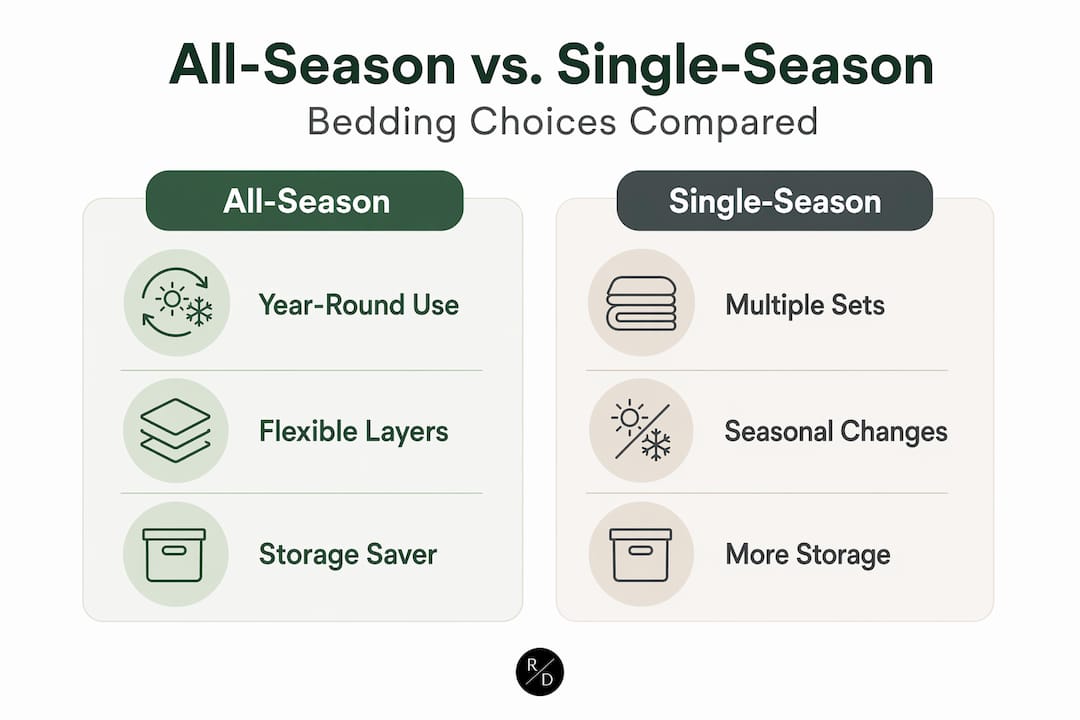
Most people assume a proper night’s sleep across twelve months requires at least two full bedding sets. A thick duvet for winter, something lighter for summer, and storage space for whichever one is not in use. The idea behind why all-season bedding challenges that assumption directly. Rather than rotating between bulky sets, all-season bedding is designed to regulate temperature throughout the year using fabric properties, layering, and breathability. This guide covers the thermal principles, material choices, and practical steps you need to get comfortable sleep in every season from a single, well-chosen set.
Table of Contents
- Why all-season bedding works for thermal regulation
- Fabric choices that work across all seasons
- Practical benefits beyond comfort
- How to select and use all-season bedding
- My take on all-season bedding
- Roomie-design all-season bedding collections
- FAQ
Why all-season bedding works for thermal regulation
The single most important factor in sleep comfort is temperature. Bedding and mattresses directly influence the microclimate around your body, either trapping heat or allowing it to escape. When that microclimate stays within a comfortable range, you sleep well. When it does not, you wake up hot or shivering.
All-season bedding is constructed to balance both sides of that equation. It retains enough warmth to feel comfortable on cooler nights without creating a heat trap on warmer ones. The key is breathability. Materials that allow air to circulate prevent the build-up of warmth against your skin, while still providing insulation when temperatures drop.
Several natural fibres perform this balancing act particularly well:
- Cotton: Soft, durable, and breathable. A good cotton duvet cover or sheet allows consistent airflow and manages moisture effectively.
- Linen: Slightly textured and highly breathable. Linen wicks moisture away from the body and keeps sleepers cool and dry.
- Bamboo: Lightweight and naturally temperature-responsive. Bamboo fibres adapt to body heat without retaining excess warmth.
Room setup matters too. Positioning your bed away from direct heat sources, using lighter curtains to manage sunlight, and keeping a window slightly ajar at night all support what your bedding is already doing. Thermal regulation is a system, and your bedding is one part of it.
Pro Tip: If you run warm at night, pair a breathable bamboo or linen duvet cover with a lighter inner tog rating. This gives you the texture and insulation you want without overheating.
Fabric choices that work across all seasons
Choosing the right material is where the guide to seasonal bedding changes actually begins. The fabric you select determines how your bedding performs in July versus January. Breathable bedding materials like cotton, linen, and bamboo keep hot sleepers cool by wicking moisture and improving airflow. Those same fabrics also hold warmth when layered correctly in colder months.

Here is a comparison of the most popular all-season bedding fabrics:
| Fabric | Breathability | Warmth retention | Moisture wicking | Ideal for |
|---|---|---|---|---|
| Cotton | High | Medium | Good | Most sleepers |
| Linen | Very high | Low to medium | Excellent | Hot sleepers |
| Bamboo | High | Medium | Very good | Hot and sensitive sleepers |
| Mulberry silk | Moderate to high | Medium | Good | Luxury preference |
| Egyptian cotton | High | Medium to high | Good | Premium comfort |
Thread count also plays a role. Higher thread count sheets in the 400 to 1000 range deliver a noticeably soft, luxurious feel with excellent durability. When paired with quality natural fibres and good weave construction, they remain comfortable across seasons. The result is a sheet that feels premium in both summer and winter.
When choosing fabric, think about your dominant sleep pattern. Do you tend to sleep warm, cool, or somewhere between? For most people, a quality cotton or bamboo option from a bedding materials guide covers the full year without compromise.
Pro Tip: Egyptian cotton in the 600 to 1000 TC range offers both softness and breathability. It is a strong choice if you want a single sheet that performs well in warm and cool conditions.
Practical benefits beyond comfort
The comfort case for all-season bedding is clear. But the practical benefits are just as strong, particularly for anyone managing a smaller home or a bedroom with limited storage.
Versatile bedding sets reduce the need for seasonal swaps entirely, which removes a genuine logistical burden. Consider what a two-set bedding system actually involves: purchasing two complete sets, storing one half the year, rotating them each season, and maintaining both over time. That adds up in cost, effort, and space.
The all-season bedding advantages go well beyond storage:
- Cost savings: One quality set replaces two average ones. The upfront investment is often lower than buying and replacing two separate sets over time.
- Storage space: Eliminating bulky seasonal sets frees up significant bedroom storage, especially in flats and smaller homes.
- Less decision fatigue: No need to track which season warrants a bedding change or schedule a swap around the weather.
- Layering flexibility: A single all-season core set works with a lightweight blanket in summer and a heavier throw in winter, giving you modular control without owning multiple full sets.
- Consistent bedroom aesthetics: Your room looks the same year-round. No jarring changes in colour or texture between seasons.
This is why all-season bedding appeals particularly to people in modern living situations. Smaller footprints, less storage, and a preference for simplicity all point in the same direction.
How to select and use all-season bedding
Getting the most from all-season bedding means choosing the right set and adapting how you layer it as the year moves through its seasons. Here is a practical approach:
- Identify your sleep temperature preference. Do you sleep warm, cool, or neutrally? This determines which fabric and tog rating suits you best across the year.
- Choose a breathable core fabric. Cotton, bamboo, or linen-based duvet covers and sheets form the foundation of a strong all-season setup. Refer to a choosing all-season bedding guide for detailed fabric recommendations by sleep type.
- Use layering to adjust warmth. Layering bedding lets you fine-tune your sleep temperature without adjusting your thermostat. Add a lightweight throw in transitional months and a warmer blanket in winter.
- Follow a seasonal bedding swap checklist. Even with all-season bedding, a light seasonal review helps. Check for wear, refresh the layers you are adding or removing, and wash everything thoroughly before storing extras.
- Maintain your bedding properly. Good care practices preserve the softness and thermal performance of premium bedding. Wash duvet covers at the recommended temperature, avoid harsh detergents, and air out duvets regularly.
- Review your setup twice a year. Spring and autumn are good points to reassess. Adjust your layers, check the condition of your bedding, and confirm your setup still matches your comfort needs.
Pro Tip: Keep one quality lightweight blanket folded at the foot of the bed year-round. In summer it stays there. In winter it adds warmth in seconds without requiring a full bedding change.
My take on all-season bedding
I have looked at a lot of bedding setups over the years, and the seasonal swap routine is one of those habits that sounds organised but often creates more friction than it solves. The assumption that you need two complete sets to stay comfortable is simply not backed up by what good all-season bedding can do.
What I have found actually works is investing in one genuinely high-quality core set in a breathable fabric, then building a small collection of layering pieces around it. A lightweight summer throw, a warmer winter blanket. That is it. The bedding layering approach gives you more flexibility than swapping between two separate sets ever will.
The mistake most people make is buying a mid-range all-season set and expecting it to outperform a premium single-season one. It will not. The fabric quality has to be there. Once it is, all-season bedding is not a compromise. It is a better system.
— Roomie
Roomie-design all-season bedding collections
Roomie-design offers a carefully selected range of premium bedding built for year-round comfort. Each set is crafted from materials chosen specifically for their breathability, softness, and durability across seasons.

For a truly luxurious all-season option, the mulberry silk duvet cover set offers exceptional breathability with a refined feel. If Egyptian cotton is your preference, the Prestige Beige 1000 TC set delivers deep softness and lasting performance across warm and cool months alike. For a coordinated setup, pair either with the Merlot luxury sheet in 1000 TC Egyptian cotton. Browse the full range at Roomie-design to find the set that fits your sleep style and bedroom aesthetic.
FAQ
What is all-season bedding?
All-season bedding uses breathable, temperature-regulating fabrics to maintain sleep comfort across warm and cool months, reducing the need for separate summer and winter sets.
What fabric is best for all-season bedding?
Cotton, bamboo, and linen are the top choices due to their breathability and moisture-wicking properties. Egyptian cotton at higher thread counts also offers excellent comfort year-round.
Is all-season bedding worth it for small bedrooms?
Yes. Versatile bedding removes the need to store bulky seasonal sets, which frees up meaningful storage space in smaller homes and flats.
How do I adjust all-season bedding between seasons?
Layer a lightweight throw in warmer months and add a warmer blanket in winter. This approach lets you personalise warmth without a full seasonal bedding swap.
Does thread count matter for all-season bedding?
Higher thread count sheets in the 400 to 1000 range offer notable softness and durability. When made from quality natural fibres, they remain breathable and comfortable across all seasons.


